Reinforcing Plastic Stand-up Pouches: The Wire Mesh Advantage
Stand-up pouches (SUPs) dominate shelves for their convenience, branding space, and light weight. However, packaging demanding products like liquids, powders, or heavy contents presents unique challenges: maintaining stable upright positioning, preventing leakage, and ensuring structural integrity throughout the supply chain. One robust solution increasingly adopted across the flexible packaging industry involves integrating fine metal wire mesh directly into the pouch structure.
Challenges in Stand-up Pouch Performance
Before delving into the solution, let’s understand the core problems with non-reinforced SUPs for specific applications:
- Instability & Toppling: Pouches filled with liquids or granular products have a high center of gravity and uneven weight distribution, causing them to tip over easily on retail shelves or during transport.
- Base Leakage/Seepage: Gusseted bases, while allowing the pouch to stand, are potential weak points susceptible to leakage, especially under pressure or during prolonged storage.
- Reduced Shelf Appeal: A slumped or leaking pouch projects a poor image, diminishing brand perception and consumer confidence.
How Wire Mesh Reinforcement Transforms Stand-up Pouch Integrity
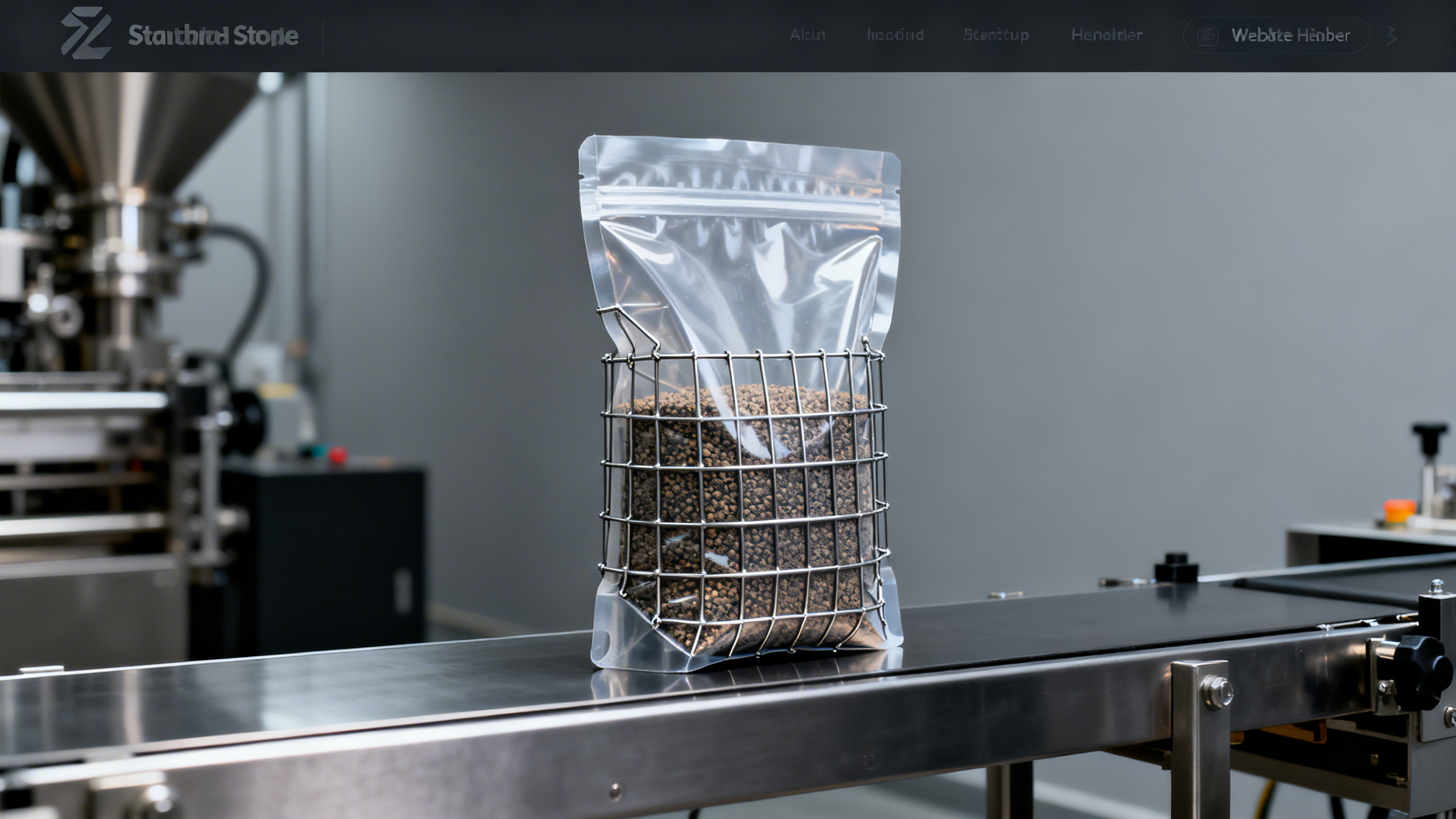
The integration of a specifically designed stainless steel wire mesh panel directly into the base gusset or lower side panels during the laminating or extrusion coating process offers a material science-driven solution:
1. Solving Stability: The Internal “Skeleton”
The wire mesh acts as a rigid, yet flexible, internal skeleton embedded within the plastic laminate layers (e.g., PET/PA + Mesh + PE/PP). This internal reinforcement:
- Provides Structural Rigidity: Creates a stable, non-collapsing base that firmly holds its shape even when empty or partially filled.
- Distributes Weight Evenly: The mesh structure spreads the product weight uniformly across the base, preventing localized stress points and significantly reducing the tendency to topple. This is crucial for liquid food pouches like sauces, cooking oils, and beverages.
2. Enhancing Seal Integrity & Preventing Leakage
Wire mesh reinforcement directly tackles leakage issues at the critical base seals:
- Reinforcing Seam Points: When incorporated within the laminate layers, the mesh extends into the seal areas. During the heat-sealing process, the plastic polymers flow around and encapsulate the mesh strands, creating a mechanically reinforced seal that is vastly more resistant to splitting or puncture under pressure or weight than a purely polymer-based seal.
- Reducing Flex Fatigue: The mesh resists the constant flexing that occurs at the base folds during handling and filling, mitigating a major cause of micro-cracks and eventual seepage in conventional pouches.
Industry Case: A leading manufacturer of premium dry pet food transitioned to wire mesh base-reinforced stand-up pouches. Their previous pouches experienced a ~5% failure rate due to base seal splitting during automated filling and pallet stacking. The reinforced pouches reduced failures to less than 0.5%, significantly lowering waste and customer complaints.
3. Maintaining Premium Shelf Presence
Beyond just function, the wire mesh contributes to aesthetics:
- Consistent Upright Stance: Pouches remain fully upright and squared-off, presenting a premium, professional appearance that attracts consumer attention.
- Improved Graphics Presentation: A rigid base prevents the pouch from sagging or bulging irregularly, ensuring brand graphics and information are displayed optimally and without distortion.
Key Considerations for Wire Mesh in Stand-up Pouches
| Factor | Details | Importance |
|---|---|---|
| Material (Grade) | Typically AISI 304 or 316 stainless steel | Ensures corrosion resistance, food safety compliance (FDA/EC1935 suitability), and hygiene.& |